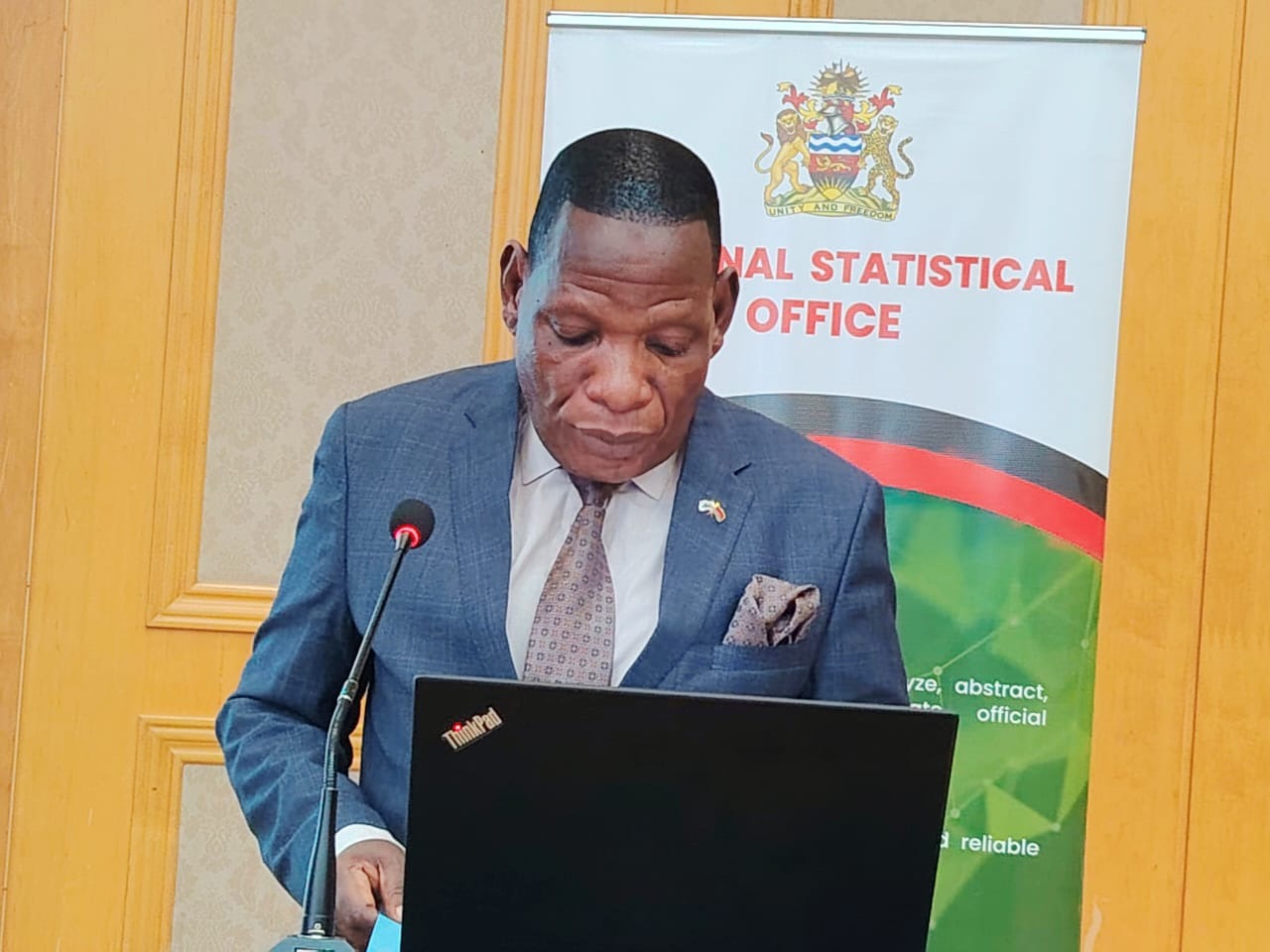

Minister of Finance, Economic Planning and Decentralization, Joseph Mwanamvekha, MP, has officially launched the 2024 Malawi Demographic and Health Survey (MDHS) Main Report, describing the findings as a critical roadmap for the nation’s fiscal and developmental future.
Speaking at the Bingu International Convention Centre (BICC) in Lilongwe, Mwanaveka emphasized that the comprehensive data provided by the National Statistical Office (NSO) is not merely a social record but a flagship national statistical product essential for prudent economic planning.
Mwanavekha aligned the survey’s findings with the Malawi Vision 2063 blueprint, noting that the goal of an inclusive and self-reliant nation is unattainable without a healthy population.
Mwanavekha highlighted that Health outcomes directly influence labour productivity, educational attainment, and household welfare, Mwanamvekha stated. “Health is not merely a social sector concern; it is a strategic economic investment. A healthy population is more productive, more resilient, and better positioned to drive economic growth.” he said
The 2024 MDHS report revealed significant strides in maternal and child survival, attributed to sustained Government investment and the dedication of frontline health workers. However, the Minister highlighted several areas of concerns that require urgent policy intervention.
He noted that the percentage of fully vaccinated infants has seen a worrying decline from 76% to 67%. The Minister attributed this to the introduction of new antigens and urged the Ministry of Health to launch immediate awareness campaigns.
Meanwhile a Total Fertility Rate is declining due to increased contraceptive access Mwanavekha noted a persistent unmet demand for modern family planning.
He also said Stunting remains a challenge, and the country is facing a growing burden of non-communicable diseases (NCDs), which threatens to strain public financing.
The report surfaced persistent disparities between the wealthy and the poor, as well as the educated and uneducated, in accessing quality healthcare.
However the treasury perspective, Mwanavekha noted that the MDHS is a vital tool for results based budgeting. In an environment of constrained resources, he argued that disaggregated data allows the government to prioritize high-impact investments and ensure value for money in sectors like health, nutrition, and social protection.
“The findings of the 2024 MDHS will be fully integrated into ongoing policy reforms, medium term expenditure frameworks, and sector budgets,” he assured
In a move for national planning, Mwanavekha confirmed that the government’s commitment to maintaining this momentum.
He announced that the next MDHS is scheduled for 2027, followed by the National Population and Housing Census in 2028.
Mwanavekha called upon development partners including USAID, the World Bank, the EU, and various UN agencies to continue their support, stressing that this data is the backbone of monitoring joint efforts toward a productive Malawi.
At the event the official symbolic release of the report, marking a milestone in Malawi’s journey toward evidence-based governance.