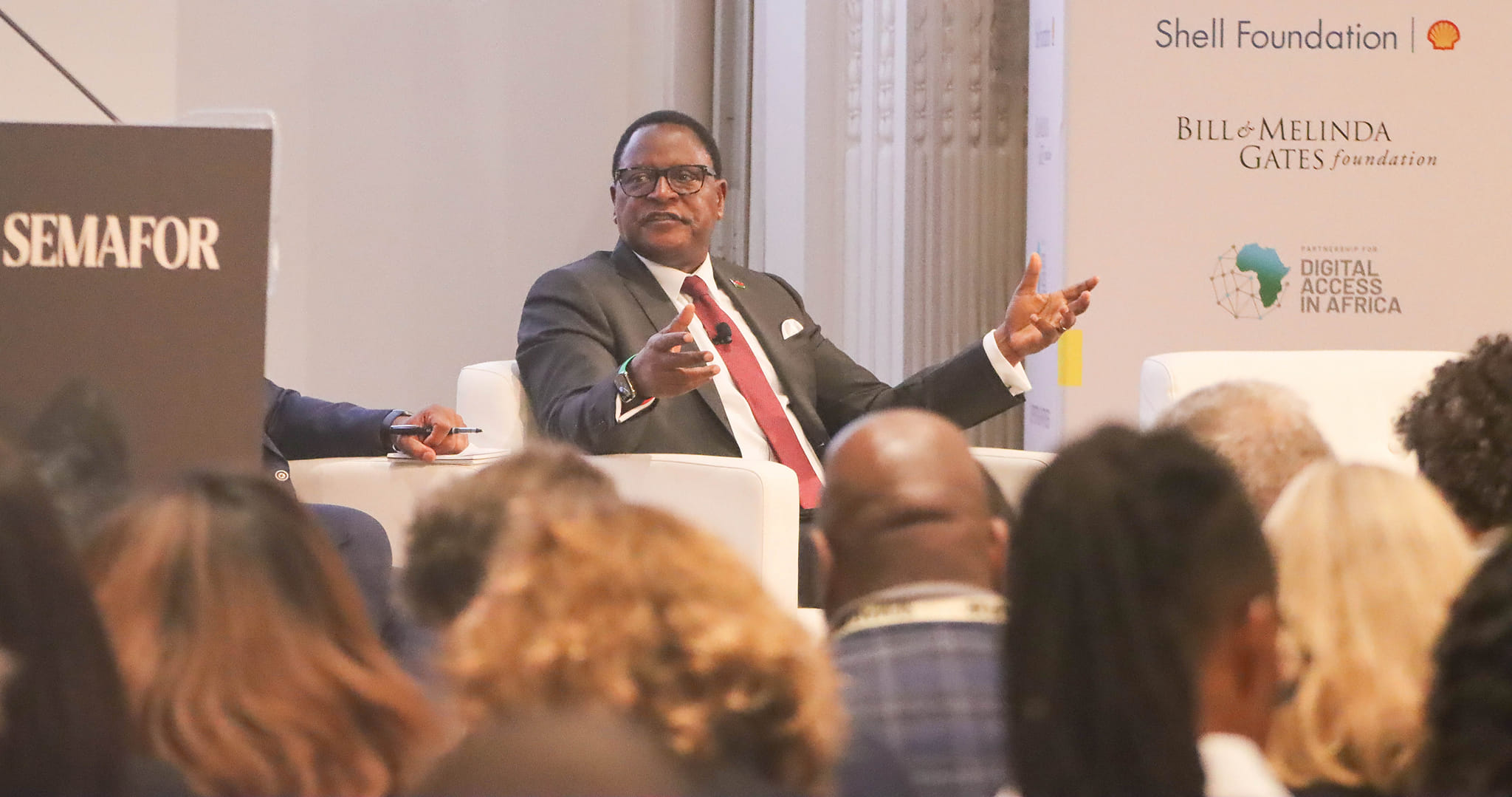

During Semafor’s Next 3 Billion Fireside meeting held at The Pierre Hotel in New York, USA, President Dr. Lazarus Chakwera expressed concern over the slow pace of internet connectivity across Africa, with only 36 percent of the continent connected to the internet. His remarks highlighted the digital divide that continues to hinder Africa’s economic growth, while also spotlighting Malawi’s recent progress in expanding internet access.
In his address, President Chakwera noted that Malawi has made significant strides in closing this gap, with internet connectivity rising from 18 percent in 2020 to 37.9 percent in 2023. This rapid increase, he emphasized, is crucial for transforming the nation’s economy.
“This rapid adoption of internet technologies is transforming our economy. The COVID-19 pandemic provided us with a stark reality check. The digital divide adversely impacted economic growth, as we lacked alternative digital service delivery platforms available to the common person. Public schools were hit harder than private schools,” Chakwera said.
The President underscored the critical role of digitalisation in driving economic development, citing the World Bank’s estimate that a 10 percent increase in internet penetration could lead to a 2 percent rise in Gross Domestic Product (GDP). He further stressed that digitalisation is not just about growth, but also about enhancing government transparency and boosting domestic revenue through innovations such as digital payments.
Chakwera pointed to Malawi’s long-term development strategy, Agenda 2063, which places industrialisation and digitalisation as key pillars. “We have laid the groundwork in our national plans, focusing on affordable connectivity, leveraging diplomatic data corridors with neighboring countries, licensing innovative solutions like Starlink, and ensuring digital literacy and data protection,” he explained.
The President assured that his government remains committed to bringing more Malawians into the digital space, aligning the country with international standards to foster economic growth. He also pointed to digitalisation as a key driver of Africa’s future economy, where homegrown innovations and digital ecosystems can thrive.
“A Malawian innovator should be able to reach the SADC market effortlessly through cross-border digital platforms. However, as we harness the power of connectivity, we must also establish robust legal and regulatory frameworks to protect our citizens from digital risks,” Chakwera concluded.
President Chakwera’s comments come at a crucial time for Africa, as the continent continues to face challenges in improving internet infrastructure. However, Malawi’s progress in digital transformation offers a model for other African nations aiming to bridge the digital divide and accelerate economic growth.