
President Arthur Peter Mutharika has placed governance reforms and stricter public finance management at the heart of his administration’s economic recovery strategy, declaring that these decisive actions are already stabilising Malawi’s economy after what he described as a “man-made crisis.”
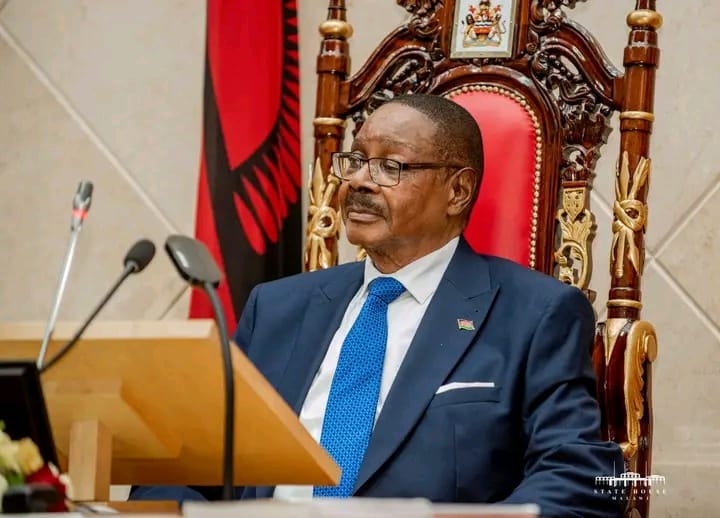
Delivering his State of the Nation Address at the opening of the 2026/27 Budget Meeting in Lilongwe, the President presented a confident roadmap focused on restoring discipline, transparency, and growth.
The President outlined concrete measures implemented to restore integrity in public sector management. These include halting fraudulent contracts, cutting non-essential government expenditure, conducting comprehensive personnel audits, and reinforcing merit-based appointments across public institutions.
According to the President, these reforms are rebuilding public trust, strengthening institutions, and ensuring that government resources are directed toward national priorities.
Encouraging economic indicators, he said, reflect the early impact of these interventions. Inflation, which stood at 28.7 percent in September 2025, is projected to fall to below 21 percent in 2026.
Meanwhile, economic growth is expected to reach 3.8 percent in 2026 and rise above 4 percent in 2027. These projections, the President emphasised, signal renewed macroeconomic stability and improving investor confidence.
Progress in agriculture has also brought tangible relief to citizens. The President reported that maize prices have declined significantly — from MK100,000 to between MK38,000 and MK55,000 per 50kg bag — easing pressure on households.
Fertiliser distribution has reached 65 percent of targeted beneficiaries, reinforcing government’s commitment to food security and smallholder farmer support.
A major highlight of the address was the substantial increase in the Constituency Development Fund, from MK220 million to MK5 billion per constituency per year. With strengthened guidelines to promote transparency and accountability, the expanded fund is expected to accelerate grassroots development and ensure communities directly benefit from national resources.
In the social sector, the administration continues to deliver meaningful reforms. Improvements in drug availability, construction of new health facilities, the rollout of free secondary education, and expanded empowerment programmes for youth and women all underscore the government’s commitment to inclusive development. Together, these initiatives reflect a leadership determined to build a stronger, more resilient Malawi grounded in sound governance and shared prosperity.