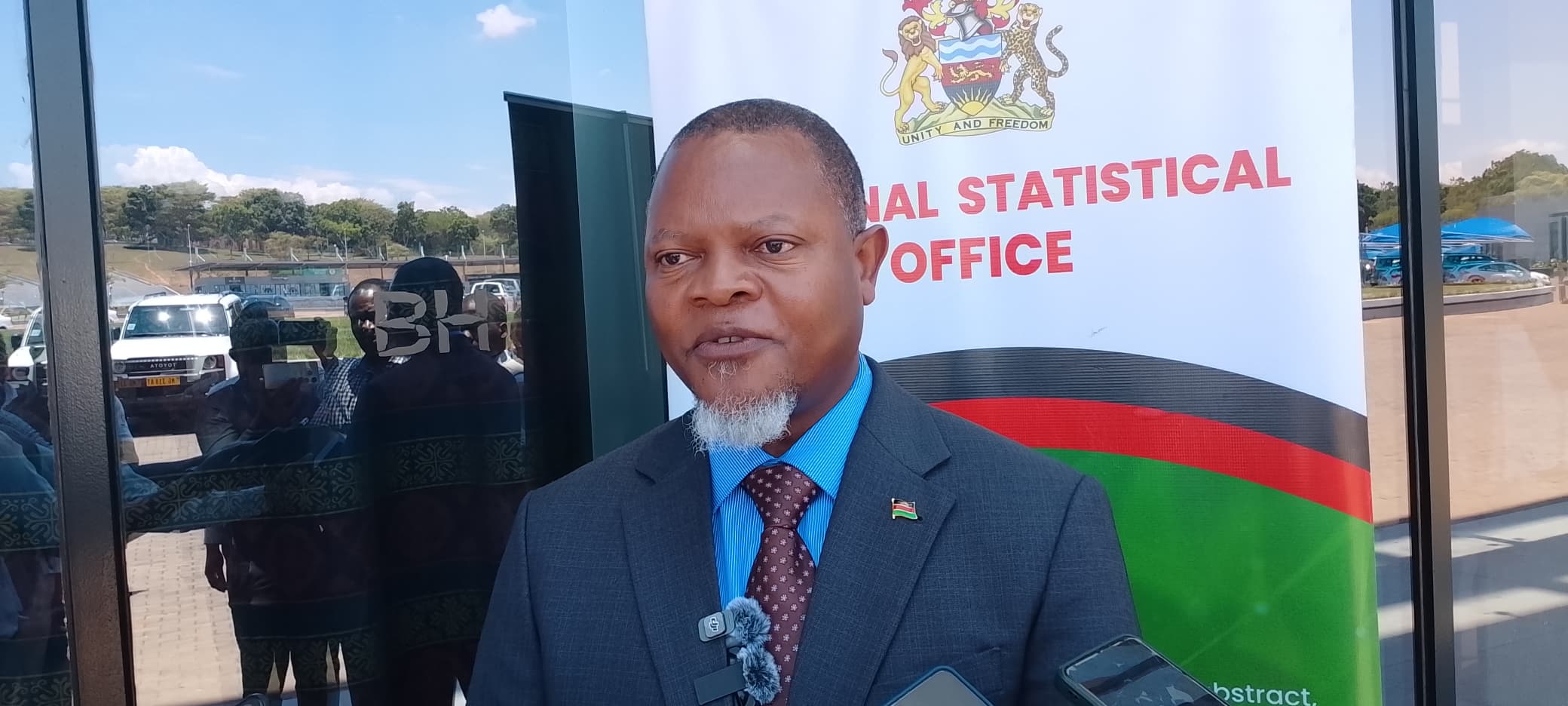
The National Statistical Office (NSO) has called on government institutions, development partners and other stakeholders to strengthen collaboration and embrace the use of credible data in driving national development.
The call was made on Tuesday during a high-level conference on the power of data held at the Bingu International Convention Centre (BICC) in Lilongwe, under the theme “From Data to Decisions, Investment and Development Impact.”
Speaking during the meeting, Commissioner for National Statistics Shelton Kanyanda said demand for statistical information is increasing as stakeholders continue to recognise the importance of reliable data in planning and decision-making.
Kanyanda said the newly launched NSO website would improve public access to statistical information through its link to the Malawi Data Archive, making important data more accessible to researchers, policymakers, government institutions and the general public.
He said the office also introduced new data series in response to the growing needs of its clients, including various government ministries, departments and agencies, to promote wider use of statistics.
Kanyanda further urged stakeholders to work together with development partners and government institutions in strengthening the country’s data ecosystem, following the relaunch of the Power of Data initiative.
He also reminded stakeholders that Malawi would conduct its next Population and Housing Census in 2028, emphasising the importance of collective preparations for the national exercise.
Clerk to the Cabinet Marjorie Shema who represented Chief Secretary Justin Saidi echoed the importance of reliable statistics, saying data plays a critical role in guiding decisions and helping institutions and individuals respond effectively to emerging challenges.
She cited the anticipated El Niño weather phenomenon as an example of the need for accurate and timely information, particularly in the agriculture sector, where farmers depend on reliable weather forecasts to determine appropriate planting periods and make informed decisions during the growing season.
Shema said access to credible information would enable farmers to prepare for changing weather patterns and minimise potential agricultural losses.
She also encouraged government institutions to familiarise themselves with the newly launched NSO website, describing it as an important platform for accessing reliable statistical information.
On the challenge of fragmented data collection, Shema observed that some government institutions independently collect similar information, resulting in duplication of efforts and unnecessary expenditure of public resources.
She therefore called for stronger coordination and collaboration among government institutions, urging them to make greater use of data already available through the NSO.
The conference brought together government officials, development partners and statistical experts to explore ways of strengthening evidence-based policymaking, investment and national development.
Key areas of discussion included the Harmonised National Management Information System, the National Statistical System Strategic Plan, preparations for the 2028 Population and Housing Census, and the role of statistics in long-term national planning.
Participants also deliberated on population policy implementation, reproductive health and youth-related issues, with emphasis on building strategic partnerships to strengthen Malawi’s national data ecosystem.
The meeting underscored the need for a stronger data-driven culture in Malawi, with stakeholders encouraged to embrace credible statistics as a foundation for effective policies, informed investment, development planning and accountability.