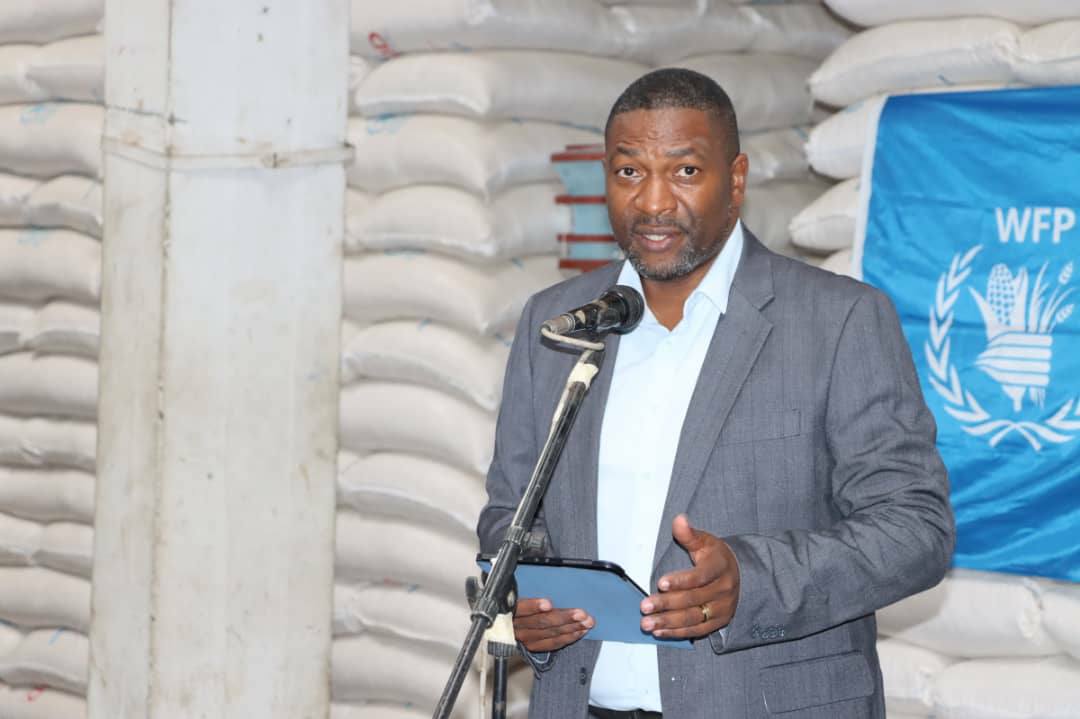

The government has received the first consignment of 47,000 metric tons of maize to support approximately three million people (687,000 households) across 15 districts affected by food insecurity.
Minister of Agriculture Sam Kawale announced the development on Thursday during a press briefing at the World Food Programme (WFP) Warehouse in Blantyre. He revealed that Malawi purchased 47,693 metric tons of maize from Tanzania at a cost of $35 million to address food shortages caused by three consecutive years of natural disasters.
“Today, we have received the first batch of 47,000 metric tons. The remaining maize will arrive by the end of March,” Kawale said, noting that 70 trucks carrying 2,000 metric tons had recently arrived from Tanzania.
He assured the public that distribution would begin immediately to prevent communities from consuming their immature crops. The Department of Disaster Management Affairs (DODMA) will oversee the distribution in collaboration with district councils. Beneficiary districts include Nsanje, Mangochi, Neno, Blantyre, and Chikwawa.
Kawale also highlighted ongoing agricultural reforms, including transitioning farmers from the Affordable Inputs Programme (AIP) to commercial farming through initiatives like the National Economic Empowerment Fund (NEEF) loan programme and the Agricultural Commercialisation (AGCOM) project. He emphasized the government’s goal of achieving food sovereignty through mega farms and other reforms.
Minister of Information and Digitalisation Moses Kunkuyu reaffirmed that food security remains a government priority. He urged the public not to sell the relief maize and thanked WFP for its logistical support.
WFP Malawi Country Director Simon Denhere confirmed the delivery and commended the Ministry of Agriculture’s proactive response. He expressed gratitude to the World Bank for its funding through the Malawi Food System and Resilience Project (MFSRP) and the Resilient Climate Response Project (RCRP), emphasizing the importance of collaboration in addressing food insecurity.