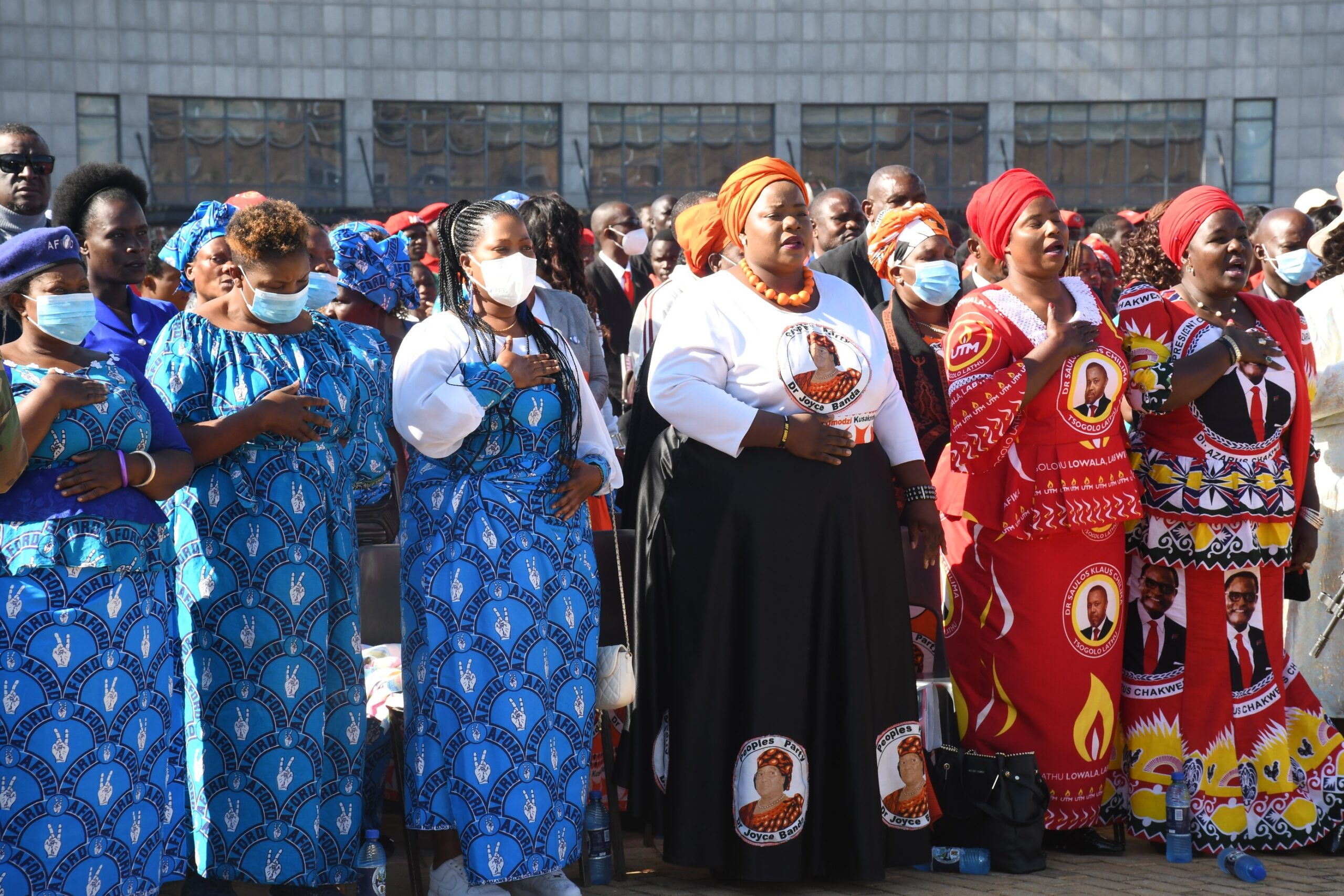

The United Transformation Movement (UTM) has recently announced its departure from the Tonse Alliance following the tragic death of its President, Dr. Saulos Chilima, in a plane crash in Chikangawa. This decision has exposed a critical issue plaguing many political parties in Malawi: the founder syndrome. UTM’s current predicament highlights how deeply rooted this problem is, as the party now appears leaderless and directionless without Chilima.
The founder syndrome is not unique to UTM; it is a pervasive issue affecting most of Malawi’s liberal political parties. The United Democratic Front (UDF) and its offshoots, the Democratic Progressive Party (DPP), the People’s Party (PP), and the Alliance for Democracy (AFORD) all suffer from this ailment. These parties have built their identities around their founders’ names, leaving them vulnerable to instability and confusion when those figures are no longer present.
UTM’s current situation is a case in point. The party’s leaders seem at a loss, grappling with an uncertain future now that Saulos Chilima is gone. This lack of preparation is evident in the calls from some party members for Mrs. Mary Chilima to step in, an attempt to cling to the founder’s legacy rather than fostering a new direction for the party. Such reactions underscore the absence of a robust succession plan, a flaw that undermines the party’s stability and future prospects.
This scenario is not limited to UTM. Imagine the DPP without a Mutharika, AFORD without a Chihana, the PP without Joyce Banda, or the UDF without a Muluzi. Each of these parties is heavily dependent on the names and legacies of their founders. Without these figures, the parties risk becoming irrelevant, reducing their influence to mere family associations rather than meaningful political entities.
In contrast, the Malawi Congress Party (MCP) stands out as an exception. MCP has managed to build a sustainable political structure that is not overly reliant on a single individual or family name. This approach has allowed the party to maintain stability and continuity, even as leadership changes occur. Other parties could learn valuable lessons from MCP’s model, particularly the importance of establishing clear succession plans and cultivating a broader, more inclusive party identity.
The founder syndrome’s prevalence in Malawi’s political sphere poses a significant threat to the democratic process. Parties that revolve around individual founders lack the resilience to adapt and grow, ultimately stunting their development and limiting their ability to contribute to the nation’s progress. For Malawi to advance politically, it is imperative for its parties to break free from this syndrome. They must prioritize establishing strong institutional frameworks and succession plans that transcend individual legacies.
UTM’s current turmoil serves as a stark reminder of the dangers inherent in the founder syndrome. If Malawi’s political parties fail to address this issue, they risk becoming mere footnotes in the nation’s history, with their influence confined to the familial ties they so desperately cling to. The time for change is now. Malawi’s political future depends on the evolution of its parties into robust, adaptable, and inclusive entities capable of enduring beyond the lives and legacies of their founders.