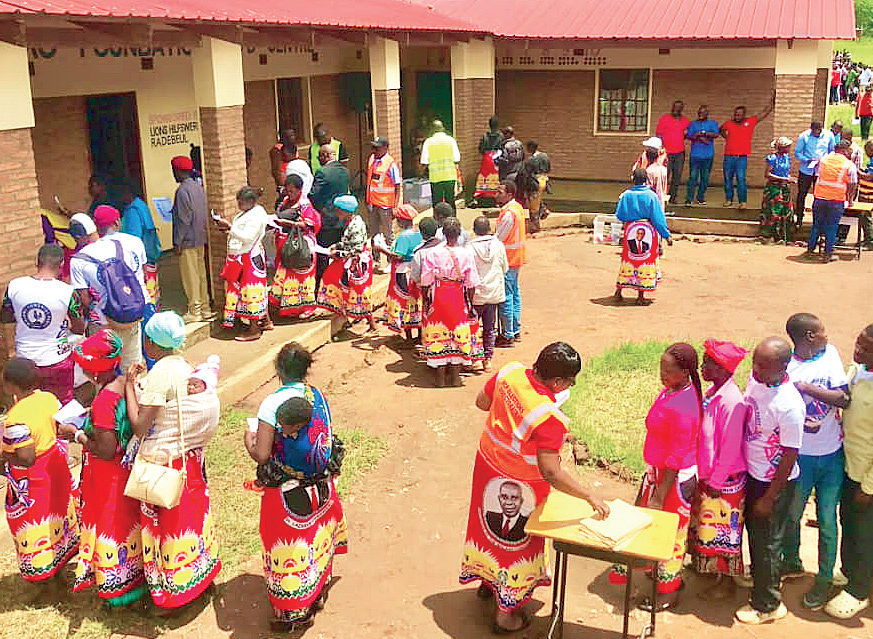

As Malawi marches steadily toward the highly anticipated September 16 general elections, the early tremors from the political ground are already sending clear signals about the likely direction of the political winds. With primary elections underway, the atmosphere is charged with tension, strategy, and, above all, forewarning.
Two of the country’s political giants the Malawi Congress Party (MCP) and the Democratic Progressive Party (DPP) have begun the critical process of selecting candidates who will represent them at the constituency level. But beyond the ballots cast and names confirmed, it’s the numbers behind these primaries that are whispering the possible fate of the general elections.
In constituencies where MCP is holding its primaries, an impressive turnout has been recorded, with a minimum of 1,500 delegates showing up to vote in each area. The high participation rate has not only increased competition among aspirants but also revealed a deeply rooted party structure that seems ready for battle come September. In some constituencies, the sheer number of delegates has turned what should be an internal party process into a full-blown political festival, attracting the attention of both the public and analysts alike.
Some intellectuals liken the MCP primaries to a “dry run” of the general election. “These numbers are not just about who gets the party ticket,” they said. “They’re a reflection of energy, mobilisation, and the ground game that will define September 16.”
In stark contrast, DPP’s primary elections have taken a quieter tone. Delegate turnout has been modest, with less than 500 participants in many constituencies. While the party has made efforts to brush off the low numbers as procedural or circumstantial, the optics have not gone unnoticed.
“If people are not showing up to choose who will represent them now, how can we expect a surge of support when it matters most?” posed one political analyst who preferred anonymity.
While both parties are facing internal challenges from disputes over candidate eligibility to logistical hiccups it is the vibrancy and presence on the ground that appears to be separating the two rivals. The turnout gap between MCP and DPP is more than just a statistic, it may very well be a prophecy.
The enthusiasm of MCP delegates could hint at a more engaged and mobilized base, while DPP’s quieter primaries raise questions about internal cohesion and grassroots appeal.
As the countdown to September continues, these primaries are not just internal party affairs they are barometers of public sentiment, strength on the ground, and electoral readiness. If the numbers from the primaries are any clue, then the writing is already beginning to appear on the electoral wall.
Only time will tell whether these early patterns will hold. But for now, one thing is clear, the primaries are no longer just a means to an end. They are, in themselves, the first real chapter of the 2025 general election story.