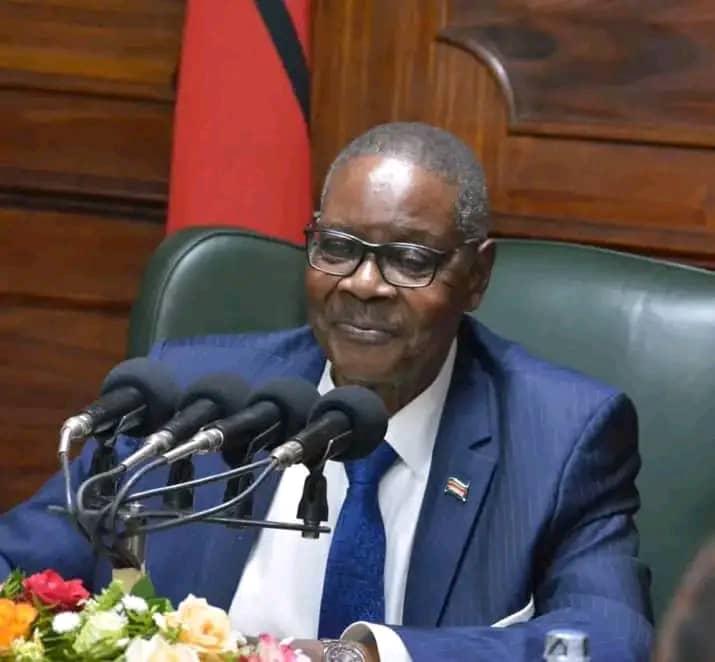

It is astonishing to watch how some civil society leaders are pressing the president Prof. Arthur Peter Mutharika to stop using his private vehicle—an issue that in many countries would barely make news, let alone spark moral panic.
Their argument appears straightforward: the state provides an official car for a former head of state, primarily for reasons of security. Yet behind this seemingly noble concern lies a wave of speculation—persistent rumours that the MCP-led government previously tampered with state vehicles allocated to Mutharika, including alleged acts of vandalism on government properties. Civil society leaders, aware of these whispers, appear curiously unmoved by them.
Benedicto Kondowe of the National Advocacy Platform expressed disbelief, accusing Mutharika of “deliberately violating” the law by choosing to use his own Escalade instead of the state-provided vehicle. He cites Section 4 of the relevant statutes, arguing that the president is obliged to use the government car whether he likes it or not, as it comes with security checks, maintenance, and fuel support.
Security analyst Sherif Kaisi echoed this sentiment, warning that Mutharika’s insistence on using his personal vehicle could expose him to unnecessary danger. Willy Kambwandira of the Centre for Social Transparency and Accountability (CST A) also sided with Kondowe and Kaisi, cautioning that private vehicles could create loopholes in state expenditure tracking.
To these three voices, Mutharika’s Escalade is not just a car—it is a symbol of potential financial misconduct and a breach of established protocol.
Yet government spokesperson Cathy Maulidi countered sharply, dismissing their concerns as misplaced. She argued that Mutharika should actually be commended for opting out of a new state-funded motorcade, which would have drained significant public resources—funds he has chosen to spare for national development priorities.
This is not an unfamiliar debate across Africa. Zambia’s President Hakainde Hichilema famously refused to move into the official State House, choosing instead to remain in his private residence as a gesture of financial discipline and solidarity with citizens.
Perhaps this is the broader context the commentators have chosen to ignore: that a leader’s use of personal property can, in some cases, be an act of frugality rather than defiance. The real question is whether Malawi’s civil society is reacting to the principle—or merely the personality—involved.