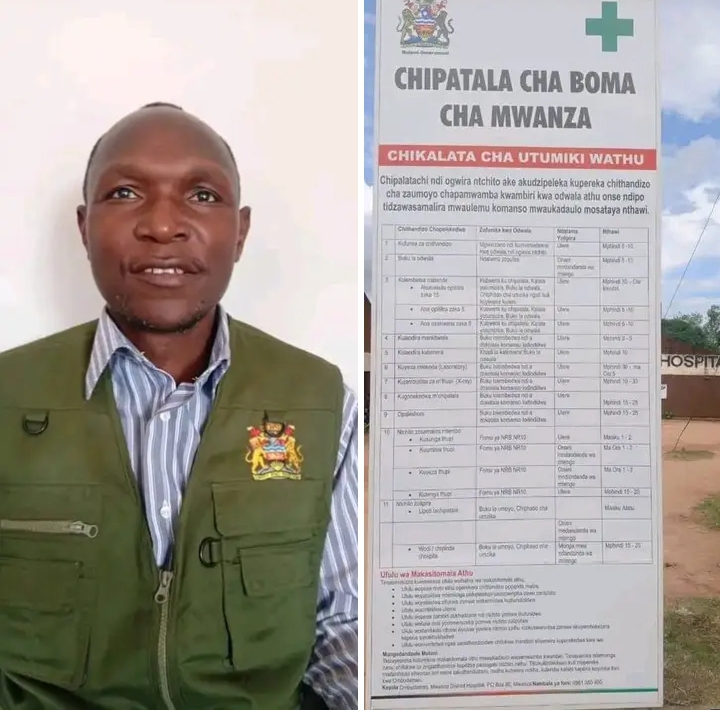

A confirmed incident at Mwanza District Hospital has brought renewed scrutiny to the enforcement of free healthcare policies, after a woman lost her baby following a delay in receiving urgent medical attention.
Information gathered by the Truth Malawi shows that the expectant mother, who had traveled from Kunenekude, was not attended to immediately upon arrival at the hospital. Instead, she was reportedly instructed to pay K100,000 before any assistance could be provided.
The demand was made despite the facility operating under a government policy that guarantees free medical services. It was further established that the woman was told she did not qualify for immediate care because she had not been registered for antenatal services at the hospital, having received care in her home area.
Sources indicate that health workers also treated the case differently after assuming the woman was from neighboring Mozambique.
As the situation grew critical, the woman’s relatives made urgent efforts to raise the required funds.
However, the delay proved fatal. By the time medical attention was finally given, the baby had already died after suffocating in the womb.
In the aftermath of the incident, hospital staff returned K90,000 to the family, while retaining K10,000, which they reportedly described as a service-related deduction.
The District Medical Officer, Anthony Chafunya, has confirmed the occurrence of the incident, stating that an official investigation is currently in progress.
He emphasized that disciplinary action will be taken against any personnel found to have acted outside established medical and ethical standards.
The case has intensified concerns among residents of Mwanza, where complaints about informal charges at public health facilities have persisted. Community members argue that such practices undermine trust and create barriers to life-saving care, particularly for vulnerable patients.
Health authorities are now under pressure to ensure accountability and reinforce adherence to the country’s free healthcare policy, as questions continue to emerge over oversight and patient protection within public hospitals.