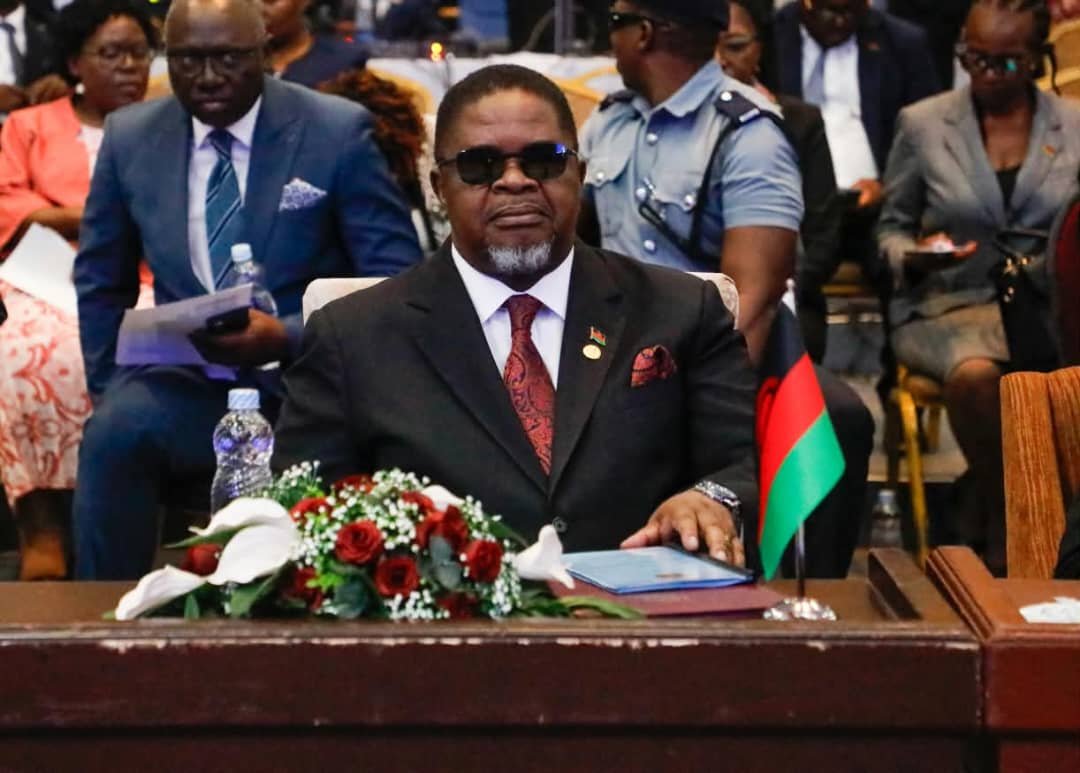
Minister of Education, Science and Technology, Bright Msaka SC, has reaffirmed Government’s commitment to increasing investment in education and strengthening accountability, saying the revised National Education Sector Investment Plan (NESIP) 2026–2030 will help translate policy commitments into measurable results.
Speaking on Tuesday during the Education Joint Sector Review Meeting in Lilongwe, Msaka said Government recognises education as a critical investment in human capital development and the attainment of Malawi 2063.
He disclosed that Government has allocated approximately K1.305 trillion to the Education and Skills Development Sector in the 2026/27 financial year.
The allocation includes K47.6 billion for free primary and secondary education, K42 billion for student loans, K34.35 billion for Constituency Development Fund bursaries, K11.3 billion for free national examinations and student identity cards, and K11 billion for teaching and learning materials.
Msaka said Government will progressively increase funding towards the internationally recommended benchmark of at least 20 percent of national expenditure, while ensuring timely release, efficient utilisation and accountability for allocated resources.
He said the revised NESIP 2026–2030 will provide a common framework for Government and development partners to set priorities, coordinate investments and improve service delivery across the education sector.
The plan will guide interventions in early childhood education, foundational learning, secondary education, teacher development, technical and vocational training, and higher education.
It will also prioritise inclusive education, digital learning, climate-resilient infrastructure and improved governance.
Msaka called on development partners, civil society organisations, communities, parents, teachers and the private sector to work together in supporting the implementation of the plan, stressing that sustainable education financing requires collective responsibility.
He said Government will continue providing policy direction, leadership and oversight while encouraging stakeholders to contribute towards improved learning outcomes.
UN Representative Naomi Campbell said the revised NESIP comes at a critical time when Malawi has a large youthful population that could significantly contribute to national development if equipped with quality education and relevant skills.
Campbell said the five-year plan would help the country unlock its demographic dividend by ensuring that children acquire the knowledge and skills needed to contribute meaningfully to the economy and the realisation of Malawi 2063.
She further emphasised the need to shift the focus of education beyond school enrolment figures to actual learning outcomes, saying the success of the education system should be measured by what children learn and the skills they acquire.
Meanwhile, keynote speaker Associate Professor Chikumbutso Manthalu called for urgent transformation of Malawi’s education system, arguing that education must play a central role in addressing the country’s development challenges.
Manthalu stressed that transforming the education sector is an urgent national responsibility that requires deliberate action to ensure the system produces citizens with the knowledge, skills and capacity to shape Malawi’s future.
The revised NESIP 2026–2030 is expected to provide strategic direction for education sector investments and reforms over the next five years, with emphasis on improving the quality of education and strengthening accountability.