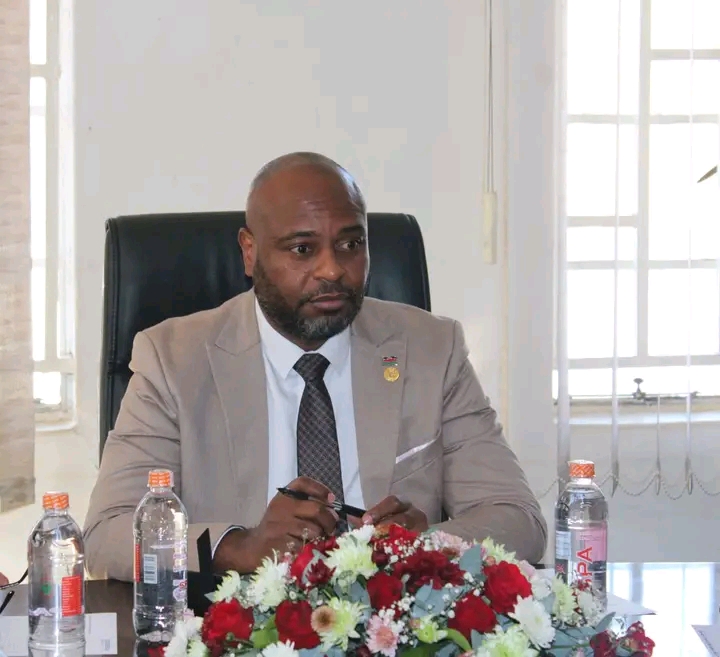
Government gazetted the Mines and Minerals (Mineral Title Fees) Regulations, 2026, in a major step to strengthen regulation of the mining sector and unlock Malawi’s mineral wealth for sustainable national development.
The Regulations, which were gazetted on 23rd October, 2026 under the Mines and Minerals Act, 2023, replace the Mineral Title Fees Regulations of 2021. They establish a broad range of mineral-related regulatory processes, including applications for mineral titles, licence extensions, ground rent, transfers of mineral tenements, amendments to licences and other associated services.
Minister of Mining, Thoko Tembo, says the significance of the Regulations goes beyond the payment of fees.
He added that they form part of a broader effort to establish a more structured, accountable and development-oriented mining sector that supports investment, encourages responsible mineral resource management and delivers tangible benefits to the people of Malawi.
For existing licence holders, the Regulations provide a formal schedule of fees applicable to various regulatory transactions. This enables licence holders to plan for their statutory financial obligations, budget appropriately for exploration and mining activities, and make timely applications for extensions and other required approvals.
The Minister has also stressed that holding a mineral title carries responsibilities, including meeting the relevant financial obligations and undertaking the required exploration work, rather than holding mineral rights indefinitely without meaningful progress.
“For prospective investors, the Regulations provide greater clarity on the fees associated with entering and operating within Malawi’s mineral sector. Transparent and clearly specified charges are an important component of a predictable investment environment, enabling investors to assess the regulatory costs of their proposed activities and incorporate them into their investment decisions. The fee schedule covers different categories of mineral titles, including reconnaissance, exploration, retention, small-scale, medium-scale and large-scale mining licences”,He explained.
According to Tembo, the Regulations also distinguish between Malawian citizens and Malawian-controlled entities on the one hand, and foreign-controlled entities on the other, for the categories specified in the Regulations.
Government says this recognises the importance of supporting Malawian participation in the mineral economy while providing a defined fee framework for international investors. It wants to attract credible investors who are prepared to undertake meaningful exploration, develop viable mining projects, establish mineral processing facilities and contribute to Malawi’s economic transformation.
One of the important features of the Regulations is the provision for escalating annual ground rent for exploration licences. The fee structure increases the applicable ground rent as the licence progresses through successive years, starting from a base amount of US$500 per square kilometre. Government says this will promote serious exploration and efficient use of mineral resources, ensuring that mineral areas are explored systematically and that commercially viable deposits are delineated and progressed towards development and production.
The Regulations also prescribe fees for other regulatory services, including applications for mineral tenement transfers, approval of community development agreements for large-scale mining licences, mineral export permit processing, licence surrender and closure certificates.