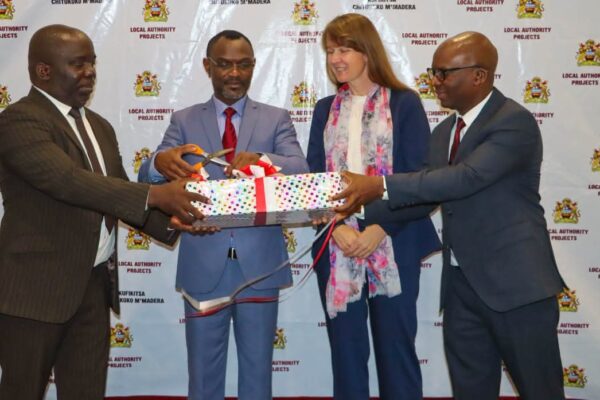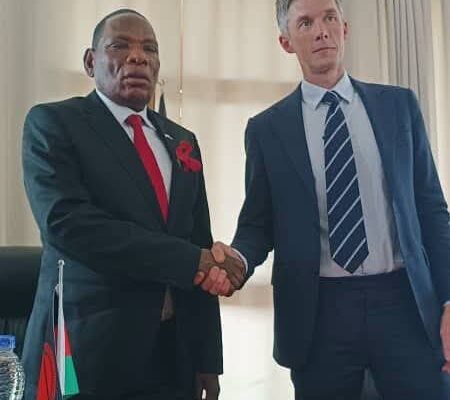
The Malawi Revenue Authority (MRA) has been described as a cornerstone of national development, playing a critical role in mobilising domestic revenue to finance public services and drive economic growth.
Since its establishment in 2000, MRA has progressively strengthened its capacity, modernised its systems and adapted its operations to respond to Malawi’s changing fiscal needs through successive corporate strategic plans.
Minister of Finance and Economic Planning Joseph Mwanamveka said the launch of MRA’s 2026–2031 Corporate Strategic Plan comes at a critical time as Malawi seeks to restore macroeconomic stability and accelerate inclusive economic growth.
He said the Government, under President Professor Arthur Peter Mutharika, is implementing the National Economic Recovery Plan (NERP), which seeks to stimulate investment and growth through four key productive sectors: Agriculture, Tourism, Mining and Manufacturing (ATMM).
Mwanamveka acknowledged that Malawi’s economic recovery faces significant fiscal challenges, noting that the country’s fiscal space has remained constrained over the past seven years.
Persistent budget deficits have placed considerable pressure on public finances, with the deficit rising from about 2.9 percent of GDP in 2019 to approximately 11.9 percent in 2025.
The development has reduced the resources available for investment in critical sectors such as education, health, roads and agriculture.
He said Government is determined to reverse the trend through a fiscal consolidation programme that targets a reduction of the deficit to about 9 percent in the medium term and approximately 3 percent of GDP by 2030, in line with SADC benchmarks.
“Achieving this will depend on two things: raising more of our own revenue domestically, and managing public finances with greater discipline,” Mwanamveka said.
He said MRA will be operating against a backdrop of four major constraints affecting Malawi’s economy — food, fuel, foreign exchange and fertilizer.
According to Mwanamveka, these challenges have a direct impact on productivity, trade and, ultimately, the amount of revenue that can be collected by Government.
He therefore stressed the need for a tax administration that is resilient, innovative and capable of responding to changing economic conditions.
MRA Board Chairperson MacFussy Kawawa said the Authority enters the new strategic period from a position of demonstrated institutional strength.
Under the previous 2020–2026 Corporate Strategic Plan, MRA recorded an average revenue performance rate of 99 percent and exceeded its annual revenue targets in four of the six years.
“In the final year alone, total revenue collections reached MK4.40 trillion against a target of MK4.32 trillion, translating into a performance outturn of 102 percent and a growth rate of 44 percent compared to the preceding financial year,” Kawawa said.
He also highlighted progress made in taxpayer service delivery, modernisation and institutional capacity development during the previous strategic period.
The new 2026–2031 Strategic Plan places greater emphasis on targeted interventions aimed at strengthening domestic revenue mobilisation.
MRA will focus on improving tax compliance and enforcement to ensure that individuals and businesses that are required to pay taxes meet their obligations.
The Authority also plans to widen the tax base by bringing more businesses and individuals into the formal economy, while accelerating digital transformation to make tax services faster, more transparent and accessible.
Improving taxpayer service will also remain a priority, with MRA seeking to make the process of paying taxes simpler and more convenient for taxpayers.
Building on the gains recorded under the previous strategic plan, MRA has been challenged to increase Malawi’s **tax-to-GDP ratio from about 16.83 percent to