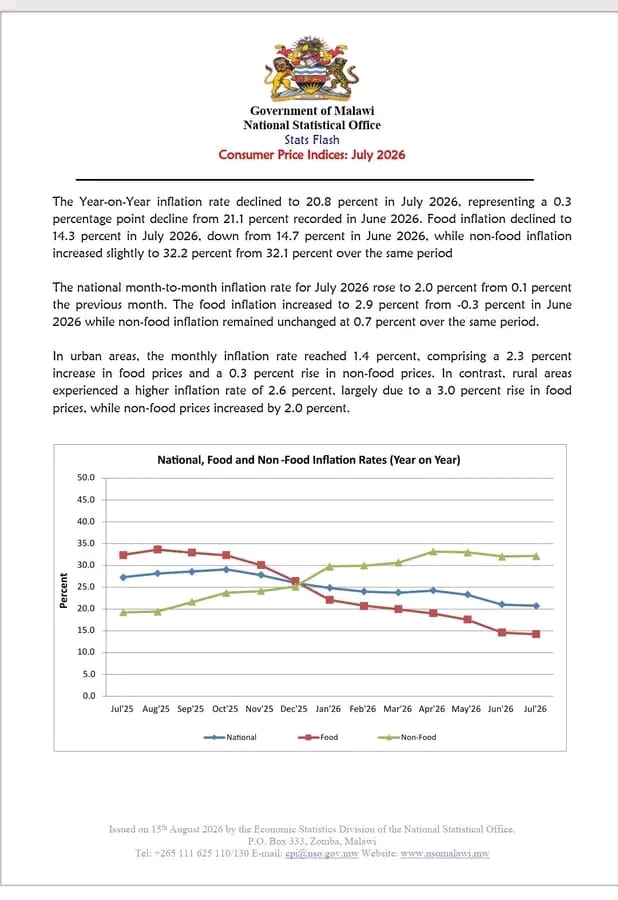
Malawi’s annual inflation rate has eased to 20.8 percent in July 2026, down from 21.1 percent in June, according to the latest figures released by the National Statistical Office (NSO).
The NSO says the 0.3 percentage-point decline was mainly driven by a slowdown in food inflation, which fell from 14.7 percent in June to 14.3 percent in July.
However, non-food inflation edged up slightly from 32.1 percent to 32.2 percent during the same period.
Despite the decline in annual inflation, monthly inflation increased significantly to 2.0 percent in July, compared with just 0.1 percent in June.
Food inflation rose to 2.9 percent in July, from negative 0.3 percent in June, while monthly non-food inflation remained unchanged at 0.7 percent.
The figures also show notable differences between urban and rural areas.
Urban areas recorded monthly inflation of 1.4 percent, with food prices increasing by 2.3 percent and non-food prices rising by 0.3 percent.
Rural areas experienced a higher monthly inflation rate of 2.6 percent, largely driven by a 3.0 percent increase in food prices, while non-food prices rose by 2.0 percent.
The latest Consumer Price Index figures were released by the NSO’s Economic Statistics Division on 15 August 2026.
The figures indicate that while Malawi’s annual inflation rate has recorded a modest decline, rising monthly food prices—particularly in rural areas—continue to put pressure on household purchasing power.