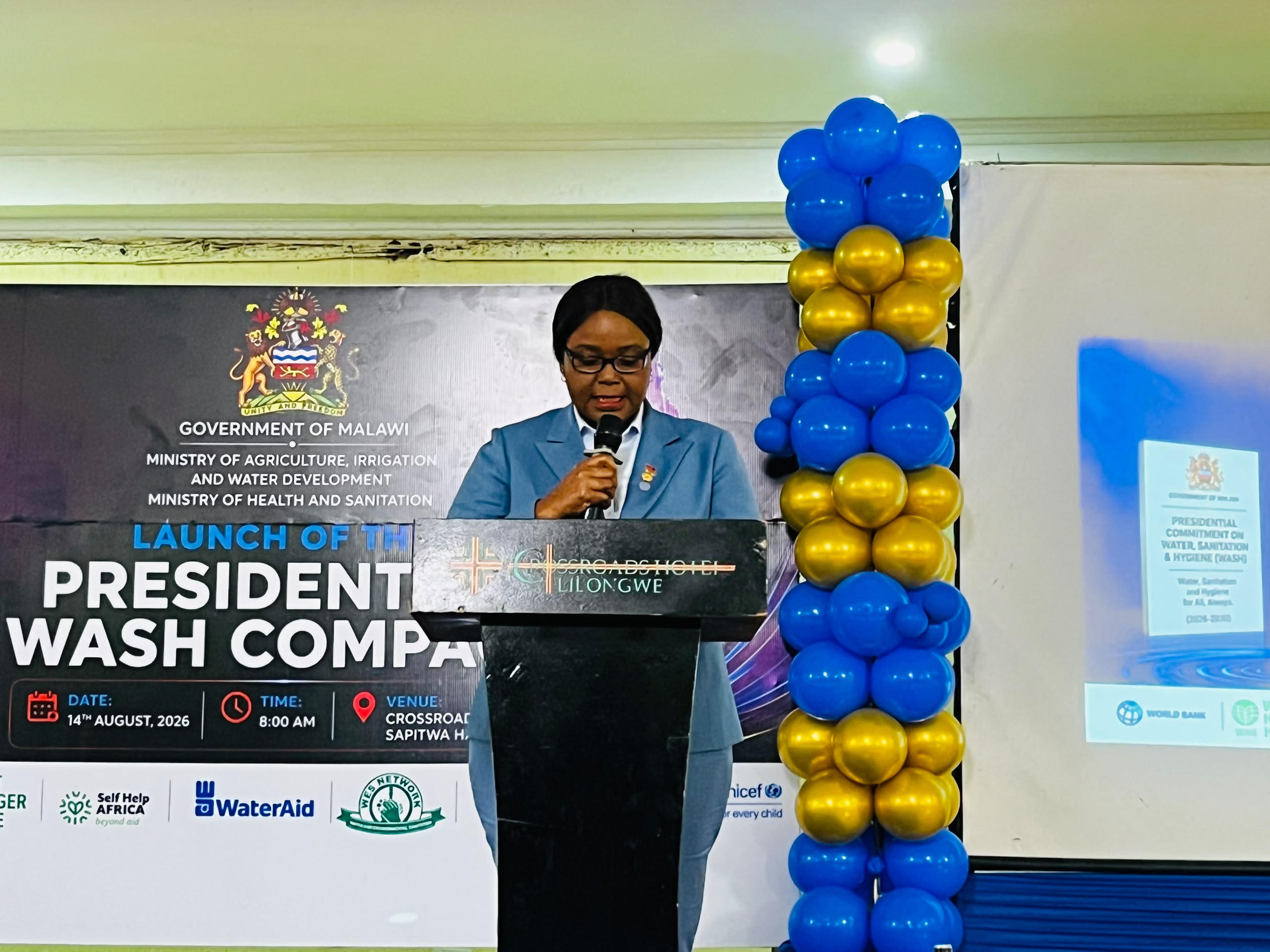
Government has launched the Malawi Presidential WASH Compact with a pledge to deliver clean and safe water to 100 per cent of urban areas and 85 per cent of rural communities by 2030.
Minister of Agriculture, Irrigation and Water Development, Roza Fatchi Mbilizi, announced the targets on Friday in Lilongwe during the launch of the Compact.
She said to meet the goals, government will more than quadruple WASH funding from 1.2 per cent to 5 per cent of the national budget.
“Our focus is on improving WASH facilities, mobilizing resources and putting in place stronger structures to ensure effective implementation of WASH programmes across the country,” Mbilizi said.
UNICEF Country Representative in Malawi, Dr. Penelope Campbell, welcomed the commitment but cautioned that huge service gaps persist. She said only 73 per cent of Malawians have access to basic water, 40 per cent to basic sanitation, and just 12 per cent to basic hand washing.
Campbell noted that Malawi needs about K560 billion every year to provide adequate WASH services. She urged government, development partners and the private sector to increase investment to close the gap.
She also stressed that climate shocks are already damaging infrastructure, saying droughts, floods and cyclones damage water systems, interrupt services and force Malawi to pay again for repairs.
“Climate resilience is not an added cost. It is how Malawi protects every kwacha already invested,” Campbell said.
To deliver results, Campbell proposed three priorities , establish a small cross-government team with clear authority, track public metrics on safe and reliable services, and publish performance data.
“Development Partners are ready to align our programmes, technical support and financing behind this agenda. That support, however, must be grounded in mutual accountability,” Campbell said.
WASH Development Partners also welcomed the Compact, calling it a clear statement that water, sanitation and hygiene are now national priorities. They said the agreement prioritizes climate-resilient services, stronger systems, public monitoring and increased financing.